

The Many Faces of Heroic Journeys …
- Yeah, though I walk through the Valley of Death …
- Made a decision to turn my will and life over to a higher power …
- The way out is through…
To me, there’s a consistent message here.
- The first dispatch comes from the 23rd Psalm: “Yea, though I walk through the Valley of Death, I will fear no evil: for thou art with me.” So, who is this “Thou?”
- The second dispatch — Step 3 of the 12-Steps — states, “We made a decision to turn our will and our lives over to the care of a Higher Power… to the Great Mystery.” That pretty much sums up the “Thou.”
- Number 3, “The way out is through,” is often stated by therapists and comes from times of war. War is a major challenge that must be confronted directly; avoidance is not an option. Yes, I am in a hard place, the Valley of Death. But if you want out, you must walk through the Valley of Death, not build a house there!

I’ve begun the long process of writing a memoir, and doing so brings up memories of so many interesting – and sometimes extraordinary — parts of this journey that it’s become clear I may have to write a few memoirs. Today I want to share a tale located in a chapter called “Breathwork,” and how even larger themes preceded and helped to frame the story of breathwork. One of them appeared 40 years before I heard of anything that had to do with breathing techniques.
It was 1954… My father was a deacon in the First Congregationalist Church of Sterling MA and my family went to church every Sunday. Church sermons were very boring for young kids (and probably a lot of other people as well), so while my parents sat through the minister’s service I attended “Sunday school.” There I heard some of the core beliefs and founding stories of Christianity. Those included feeding the multitudes, raising Lazarus from the dead, and other miracles… as well as the crucifixion, resurrection, and of course, the second coming… the promise that Christ would return to earth someday. On that fateful day when I listened to the story of the second coming, my first thought was, “I wonder if it’s me?” “Is it me?” That’s a curious thought, especially for a 5-year-old, and it’s also a dangerous one. It contained a message that suffering could be part of a spiritual path – after all, the Chosen One came to Earth to suffer — and his transformation from Jesus to the Christ required a crucifixion, a death and rebirth on the cross, and by accepting this calling he brought the possibility of forgiveness and redemption to humanity.
To a 5-year-old boy this was heady stuff and comforting in some way. Perhaps the pain and suffering I was experiencing in that small rural house with my family of origin might be meaningful; it might have a purpose. If it did, then it was bearable, but of course this is a double-edged sword that made things muddy and hard to interpret. “Is this abuse… or is it something that’s supposed to happen and part of the plan?” Is it a virtue if I bear it stoically… or are my authentic feelings being ignored and suppressed? How much do I have to take before yelling “Stop”? How many times did I tell myself that not having any feelings was a good thing?

- In 1971, I dropped out of Graduate School and moved to Vermont. I was one of many who felt burned out from the political upheavals of the late 60s and moved back to the land. I felt comfortable in a thriving population of educated young people who were curious and exploring all sorts of things, from biodynamic farming and communal living to encounter groups. Very early on I found myself in a circle exploring primal therapy, originated by Arthur Janov with the publication of The Primal Scream in 1970 and popularized by John Lennon in the albums he released subsequent to his own therapy.
- In primal therapy sessions, participants are placed in the most vulnerable position possible – lying spread-eagled over round cushions beneath their backs with their arms stretched out to the side. In addition, they breathe only through their mouths and are not allowed to swallow, lest doing so would push down their feelings. I found myself in that position a couple months after moving to Vermont, and when the therapist saw my head rolling side to side and my jaws gnashing, he took a small, rolled-up towel and forced it into my mouth. Suddenly I was biting ferociously, and as I did so, I saw vivid images of myself kneeling over my father and ripping out his throat with my teeth. At the end of that experience, I remember saying, “Well I guess I have some feelings after all.”

So here we are, and I want to return to the story of my breathwork journey proper…
In the early 1990s, a dear friend of mine lived a couple of miles away. Her house was in a rural area on a little-traveled dirt road, and her home had a full basement that was primarily open space with thick plush carpeting. She and I formed a group that met every Friday afternoon at 4:00 PM to explore and practice a Holotropic-adjacent style of breathwork.
In our gatherings, people would divide up — half becoming “breathers” and the other half “sitters,” who would attend to those on the floor breathing. We used an honor system — if you were a breather the last time you were there, you would be a sitter when you next came. In this context, over the next several months I had an extraordinary experience of deep healing.
To be continued…
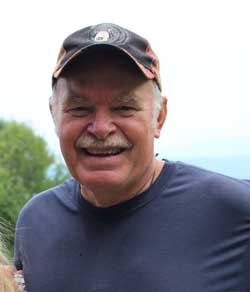
I experience a deep, abiding peace and joy. I want the same for you. Please explore the site and the programs offered here, and if you feel they could help you find or travel your path with heart, I’d be honored to help you.

So many abuse victims end up committing violents acts against others. You, on the other hand, chose to walk bravely through the Valley of Death to understand and root out this often inherited disease. Instead of acts of aggression, you have committed yourself to acts of love and healing. Kudos to you Sparrow.